
Finance Minister Nirmala Sitharaman presented her third Budget on February 1.

The middle class is a big force to fulfil dreams of a prosperous and developed India and our government has taken many decisions to empower it, the prime minister said.

The 61-year-old MLA from Islampur seat of Maharashtra has been asked to depose before the federal agency in Mumbai on Friday, they said. Patil, a former minister of home and finance, is also the Maharashtra president of the NCP and is a seven-term legislator.


'This plan is basically to allow some of the government assets for rent, and surely not for sale.' 'There is a difference between selling a house and renting out a house.'

US Ambassador Richard Verma's tips to the Indian states.

Leveraging global capital markets to give muscle to an innate competitive advantage in rapid mass transaction systems will lead to India becoming a petri dish for global enterprises and new-age innovation that it yearns to be.
The Securities and Exchange Board of India on Thursday said it has unearthed yet another IPO scam in the public issue of shares of Infrastructure Development Finance Company Ltd.

PE firm True North's investment model is to take 51% stake in mid-sized companies and make them large, says Niraj Bhatt.

Several high profile companies are burdened with losses, mounting debt and have a huge load of operational costs.
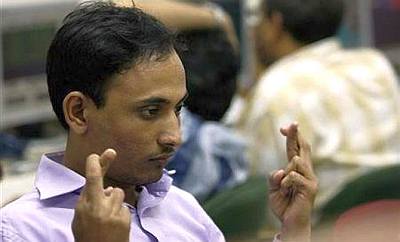
Investors remain cautious ahead of F&O expiry.

A business in India wanting access to maps and geospatial data would typically have to wait months before it got what it wanted. All this is set to change with the new guidelines on geospatial data, report Neha Alawadhi and Peerzada Abrar.

The central government has agreed in-principle to Air India employees' main demands. It fears an industrial dissension now could impede the process of privatisation. It has agreed to bear the cost of liquidation loss on account of transfer to the Employees' Provident Fund Organisation (EPFO) from company-owned trusts, inclusion of employees in the central government health scheme (CGHS), and encashment of leaves. The template of the Air India process will be followed for other public sector undertakings up for privatisation at a later date.

'We had tremendous faith in honorable Modiji in his second term as he was well-settled. Sadly that has been belied.'
CII suggested the policy measures required to ease the tight liquidity situation by cutting CRR by at least 50 basis points.


83% of the CEOS plan to hire more in the new year.
The fund is to invest in income generating assets such as malls, office complexes among others.

5G networks in India can be deployed in three months but in limited areas as the optical fibre based infrastructure to support the technology is not ready yet, telecom industry players said on Tuesday. Nokia India head of marketing and corporate affairs Amit Marwah said that India has to take a call on deployment of 5G services otherwise it will miss to take advantage of the next generation technology that it can bring for the economy.

Hemant Kanoria tells Niraj Bhatt why understanding the dynamics of the borrower's business is critical for the lender.

Experts say investors should be careful, as even a 50-100 bps cut in rates will not help such companies if their business is not doing well. Check what is the problem and consider

Most of the NBFCs do not take public deposits but that does not mean they cannot create systemic risks. The banking system has at least Rs 57,000 crore exposure to IL&FS. Haven't the banks invested public money in IL&FS papers, asks Tamal Bandyopadhyay.

India can become the number one automotive manufacturing hub in the world within five years, but auto companies need to enhance safety features to reduce deaths due to road accidents, Union Minister Nitin Gadkari said on Thursday. In his inaugural address at the Auto Expo 2023 here, the minister for road transport and highways asserted that the government's target is to reduce these accidents by 50 per cent before the end of 2024 while asking the auto industry to take suo moto action for road safety as the government doesn't want to make anything mandatory. Gadkari's sentiments were also echoed by Minister of Heavy Industries Mahendra Nath Pandey, who lamented that while India has only 1 per cent of the total overall vehicles, the country accounts for 11 per cent of the total global deaths due to road accidents.
.jpg)
The nomination of cluster heads for defence, infrastructure and finance business is awaited.

Banks are in need of government support to manage the stressed assets

'The rising cost of construction, the cost of doing business, high compliance, and inflation/interest rates going up have already reduced returns to single digits.'

As the Indian currency hovers around its lowest versus the US greenback, several smaller and mid-sized companies are expected to face rough weather as almost 44 per cent of the foreign loans taken by Indian companies remained unhedged. According to the data sourced from the Reserve Bank of India, Indian companies raised around $38.2 billion in the financial year ended in March. Of this, only 56 per cent of the loans are hedged while the rest of the foreign loans remain unhedged, thus risking the companies to forex volatility.

The Ambani brothers, Mukesh and Anil, came together on Thursday to raise the issue of stalled projects plaguing India Inc and implored the Maharashtra government and the Centre to make Mumbai, India's financial capital, an easier place for business and investments. "Several projects are stuck for many years in Mumbai and we would like to know how the government intends to improve the financing and execution of projects, including those relating to infrastructure and education which have been in limbo for long and are affecting the growth of the city," Reliance Industries Ltd (RIL) Chairman Mukesh Ambani told Finance Minister Arun Jaitley. Seated on the same table was his brother, apart from Tata Group Chairman Cyrus Mistry and State Bank of India (SBI) Chairman Arundhati Bhattacharya. Jaitley was addressing the Mumbai Next MMR Transformation conclave, organised by the Maharashtra government and Mumbai First here, through video conference. In his reply, Jaitley said the government was exploring several options of infrastructure financing in India and that a number of international bodies were ready to fund infrastructure development projects. He added the government was keenly considering these funding sources. While praising Maharashtra Chief Minister Devendra Fadnavis for honesty, Jaitley also had a word of advice. Apart from being honest, the government had to be decisive, he said. On his part, Reliance Group Chairman Anil Ambani told the chief minister about his experience of decisions being delayed due to an indecisive bureaucracy and the need to protect officials who wanted to take quick decisions. "Through the past many years, we have faced a number of obstacles in decision-making," he said, adding he was speaking as someone who had lived and invested in Mumbai. Fadnavis responded by saying he would bring about a transparent process to ring-fence officials. Both the Ambani brothers have announced a number of infrastructure projects in and around Mumbai, including a world-class convention centre in Bandra Kurla Complex by RIL, but very few have actually fructified. RIL's special economic zone project failed to take off due to land acquisition problems in Raigarh, while a second SEZ near Mumbai is stuck due to lack of clarity in SEZ norms. The first phase of the Mumbai Metro, set up by Anil Ambani's Reliance Infrastructure, was marred by cost overruns and run-ins with the government over fares. Subsequently, the company withdrew from the second and larger phase, citing inordinate delay. Anil Ambani also withdrew from Mumbai's sea link project on the same grounds. The brothers had also bid for a trans-harbour sea link between Navi Mumbai and Mumbai under the Congress-Nationalist Congress Party government, but their bid was rejected. Reliance Infrastructure is also the power supplier to more than half of this city. Participating in the conclave, some of India Inc's leading bankers said making Mumbai a financial hub would take at least a decade. SBI's Bhattacharya said the Indian currency should be made fully convertible and facilities should be created for it. "However, for this, the economy needs to look up and that will happen only in the next 7-10 years, not immediately," she added. Sunil Kaushal, Chief Executive Officer of Standard Chartered, India, pitched for strong infrastructure to support development. "We will take a long time to develop into a global financial centre. We need to solve transport bottlenecks in Mumbai and have lifestyle facilities for people working in and around these areas," he said.

The government will press ahead with the sale of public sector companies that have been approved by the Cabinet, Finance Minister Nirmala Sitharaman said on Thursday. Highlighting that FDI flow into India is much higher compared to other emerging economies, she said India's strong macroeconomic fundamentals, ability to do reforms and a stable government help attract long-term foreign funds into Indian businesses.

Vodafone Idea's (Vi's) search for a lifeline has turned longer and tougher even as it continues to lose customers and delay vendor payments. Vi's much-needed Rs 1,600-crore fundraising plan got stuck due to the government's silence on picking up a proposed 33 per cent equity in the financially stressed telco. The development spells further trouble for the company, which has an overall debt pile of Rs 2.2 trillion, including hefty dues to the government.

India's economic image is not affected due to Adani Group's recent decision to pull out Rs 20,000 crore FPO (follow-on public offers) amid allegations of financial wrongdoings, Finance Minister Nirmala Sitharaman said on Saturday.
The assumption clearly was that project execution timelines would be adhered to and revenues would flow in as scheduled.

Omkeshwar Singh, head, Rank MF, a mutual fund investment platform, answers your queries.

Gandhi said that the BJP government has clearly mishandled the economy that was built by the United Progressive Alliance government, and is now resorting to selling the country's assets as a "last resort" to generate some money.

The reason is believed to be a 19% increase in interest cost.
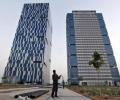
At the end of October, Sri Lanka President Maithripala Sirisena handed over the deeds for the transfer of 116 hectares in Colombo Port City to China Harbour Engineering Company on a 99-year lease to build a financial centre.

Mukesh Ambani said the Digital India initiative has the potential to transform the lives of 1.2 billion Indians using the power of digital technology.

While she primed up spending on infrastructure to create jobs and boost economic activity, Sitharaman did not tinker with income tax slabs or tax rates. Her Budget for the fiscal year beginning April 2022 proposed a massive 35 per cent jump in capital expenditure to Rs 7.5 lakh crore, coupled with rationalisation of customs duty, an extension of time for setting up new manufacturing companies and plans for starting a digital currency and tax crypto assets.

Housing Development Finance Corp (HDFC) chairman Deepak Parekh on Tuesday said that while the country's macroeconomic fundamentals remain strong and the recovery is in progress, the unpredictability of coronavirus will remain a key challenge. Owing to the second wave, the Indian economy is likely to mirror a similar trend seen in FY21, where the first half of the financial year is weaker and the second half is significantly stronger, he said. "I remain confident that India's macroeconomic fundamentals are strong. Recovery is underway," Parekh said while addressing the 44th annual general meeting of HDFC Ltd. He said, the country's forex reserves and foreign direct investment inflows have scaled record highs, the capital markets are also buoyant and agriculture growth is expected to remain strong with food grain production estimated at over 305 million tonnes.

Booked between 2007 and 2011, out of the total 32,700 residential units under various Jaypee Infratech (JIL) projects, at least 20,000 homes are yet to be delivered. Supreme Court documents show that, till last March, Jaypee had issued 7,997 offers of possession to homebuyers while executing only 6,530 sub-lease deeds. These deeds offer homebuyers possession rights but, unlike registration, does not guarantee absolute ownership.
